
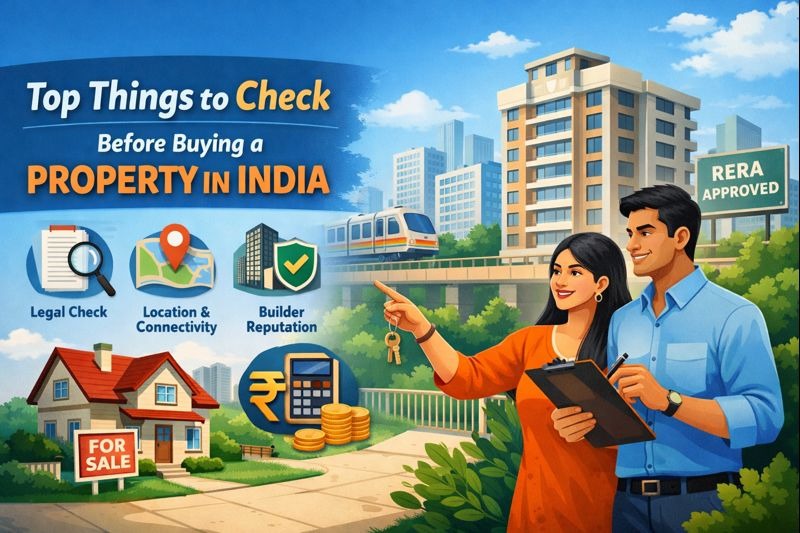
Buying a property in India is a major financial and emotional decision. Whether you are purchasing a home for self-use or investing for future returns, making the right checks before finalizing a deal is extremely important. With changing regulations, rising property prices, and varied developer credibility, a well-informed approach can save you from legal troubles and financial loss. Here are the top things you must check before buying a property in India.
1. Verify Property Legal Documents
The first and most crucial step is to verify all legal documents related to the property. Ensure that the title deed clearly states the ownership and that the seller has full rights to sell the property. Check for encumbrance certificates to confirm there are no legal dues, loans, or disputes attached to the property. For under-construction projects, approvals from local authorities and land-use permissions are essential.
2. Check RERA Registration
RERA (Real Estate Regulatory Authority) registration is mandatory for most residential and commercial projects in India. Always verify the project’s RERA number on the official state RERA website. This ensures transparency, timely delivery, and protection of buyer interests. RERA also provides access to important details such as project layout, carpet area, completion timeline, and developer history.
3. Location and Connectivity
The location of a property significantly affects its long-term value and livability. Evaluate connectivity to major roads, public transport, schools, hospitals, offices, and marketplaces. Properties located near upcoming infrastructure projects such as highways, metro stations, or commercial hubs often offer better appreciation potential. Also, check the neighborhood safety, cleanliness, and future development plans.
4. Builder Reputation and Track Record
Before buying from a developer, research their market reputation. Look into past projects, delivery timelines, construction quality, and customer reviews. A reliable builder with a strong track record reduces the risk of delays, poor construction, or legal issues. Visiting completed projects by the same developer can give you a clear idea of quality standards.
5. Carpet Area vs Super Built-Up Area
Many buyers focus only on the price per square foot without understanding the actual usable space. Carpet area refers to the area within the walls where you can actually live, while super built-up area includes common spaces like staircases and lifts. Always check the carpet area mentioned in the agreement and compare prices accordingly to avoid overpaying.
6. Construction Quality and Amenities
Inspect the quality of construction materials, fittings, plumbing, and electrical work. Poor construction can lead to high maintenance costs in the future. Also, review amenities such as power backup, water supply, parking space, security systems, lifts, and green areas. Ensure that promised amenities are clearly mentioned in the agreement.
7. Total Cost and Hidden Charges
The property price often includes several additional charges such as GST, stamp duty, registration fees, maintenance deposits, parking charges, and club membership fees. Ask for a complete cost breakup before booking the property. Understanding the total financial commitment helps in better budgeting and avoids unpleasant surprises later.
8. Home Loan Eligibility and Bank Approval
If you plan to take a home loan, check whether leading banks and financial institutions have approved the project. Bank-approved projects usually undergo legal and technical verification, adding an extra layer of security. Also, assess your loan eligibility and EMI affordability before making a commitment.
9. Resale Value and Rental Potential
Even if you plan to live in the property, consider its resale and rental potential. Properties in prime locations with good infrastructure, legal clarity, and reputable developers generally attract higher resale value and steady rental income.
Conclusion
Buying a property in India requires careful planning, legal verification, and financial assessment. By checking these essential factors, you can make a safe, smart, and rewarding property investment. Taking the time to research and verify today can protect your investment for years to come.